
Stop Living Around Your Dog’s Behavior.
Start Building the Dog You Actually Want to Live With.
Private, hands-on dog training that helps Indianapolis owners build calmer behavior, clearer communication, and real-world reliability.
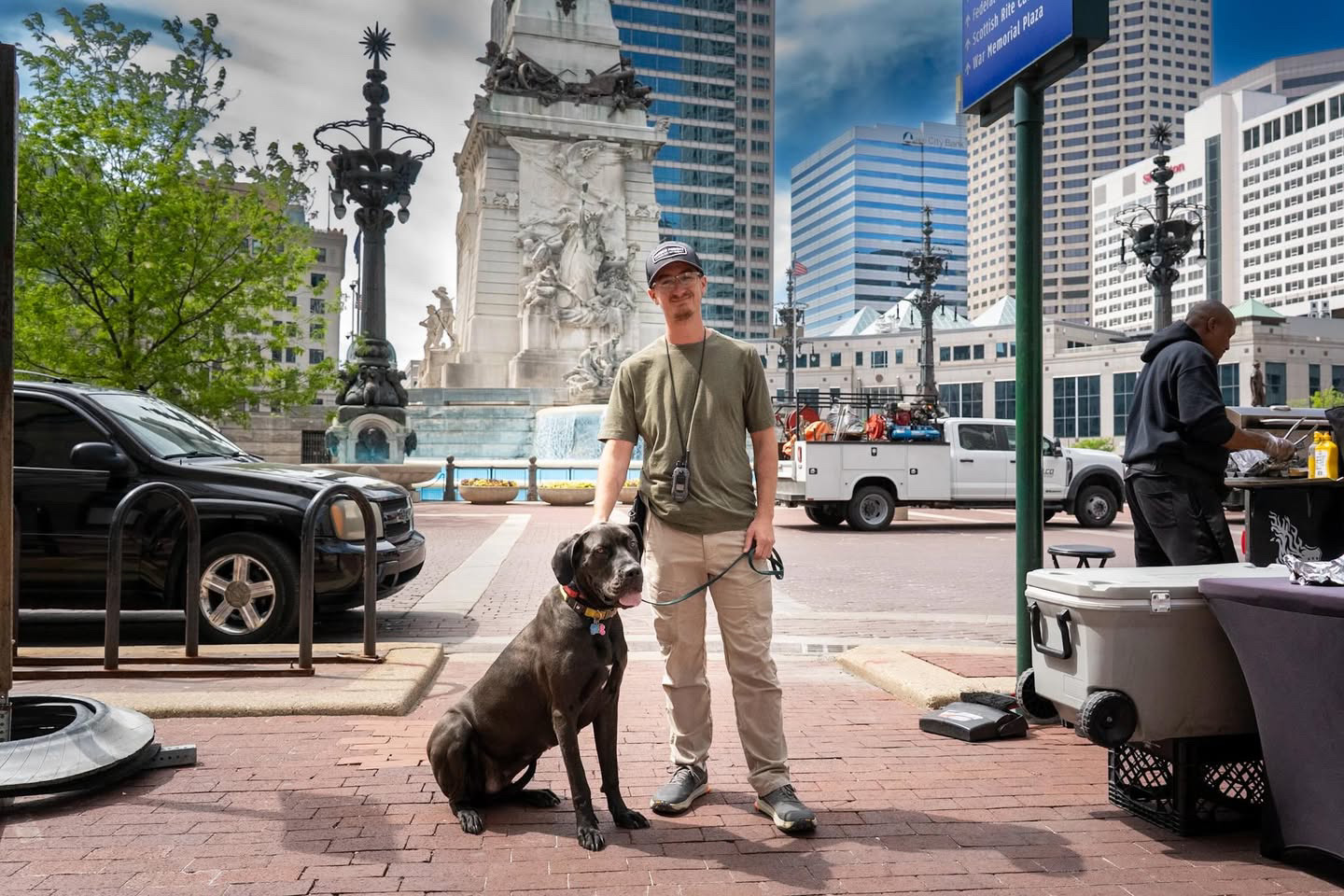
Your Dog’s Behavior Shouldn’t Control Your Life.
You should not have to plan your entire day around whether your dog will pull, bark, jump, ignore you, embarrass you, or completely lose control.
You should not have to avoid visitors, cross the street every time another dog appears, or rely on treats just to get your dog’s attention.
And you should not have to accept chaos as your dog’s permanent personality.
The behavior you are seeing is information.
It tells us where communication is breaking down, where structure is missing, and where your dog needs more guidance.
Once we identify the cause of the problem, we can begin replacing confusion and conflict with clarity, confidence, and trust.
Does Any of This Sound Familiar?
Walks Feel More Like a Fight
Your dog pulls, lunges, barks, zigzags, or acts as though you are not even holding the leash.
Commands Only Work Sometimes
Your dog may listen inside the house but completely ignore you around people, dogs, smells, or excitement.
Your Home Feels Chaotic
Jumping, barking, counter-surfing, destructive behavior, poor boundaries, and an inability to settle have become part of everyday life.
You Are Constantly Managing Behavior
Instead of enjoying your dog, you are always restraining, redirecting, bribing, avoiding, apologizing, or trying to prevent the next incident.
You Have Tried Everything
Treats, videos, new equipment, group classes, advice from friends, and endless repetition have not created lasting change.
Your dog does not need another random training tip.
You need a clear system that teaches both you and your dog how to communicate with one another.
Real Training for Real Life
Your dog does not need another random training tip or a command that only works when treats are visible.
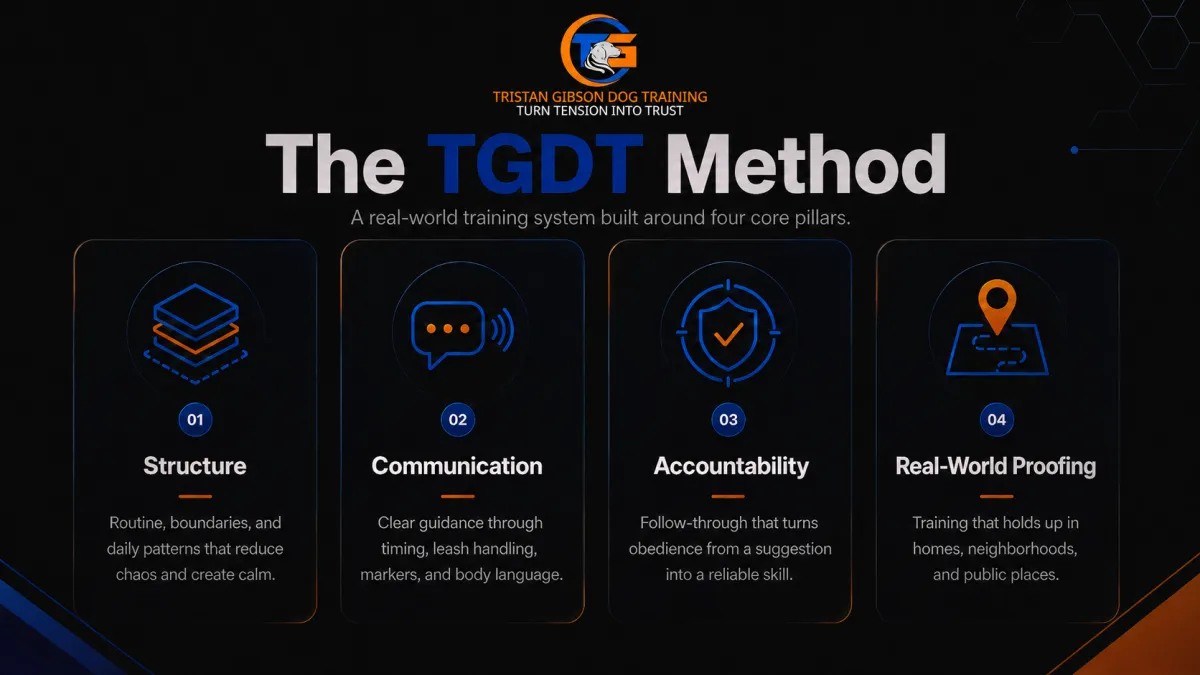
You need a clear system that helps you build:
Calmer walks
Better household behavior
Reliable obedience
Clear communication
Confidence around distractions
More freedom with your dog
Every program is customized to the dog in front of us. You will also learn how to maintain progress at home because training the dog is only half the process.
Testimonials
FAQs
Answers to Your Common Dog Training Queries
What age should my dog be to start training classes?
Training can begin as early as 6–8 weeks old with age-appropriate exercises such as name recognition, luring, crate training, potty training, handling, leash foundations, and basic household structure.
Starting early helps prevent unwanted habits before they become established. Older puppies and adult dogs can also begin training at any age—it is never too late to improve communication, behavior, and obedience.
What is the duration of each training session?
Most private training sessions are approximately 60 minutes.
The exact length may vary slightly depending on your dog’s needs, attention span, the behaviors being addressed, and what is being covered that day. Sessions are kept focused and productive so both you and your dog can learn without becoming overwhelmed.
What Happens During the Free Consultation?
During the consultation, Tristan will meet you and your dog, discuss the behaviors you are struggling with, review your dog’s history and daily routine, and learn what you want training to accomplish. He will then recommend the most appropriate training plan based on your dog, your situation, and the level of owner follow-through required.
What training methods does Tristan Gibson use
Tristan uses a balanced, individualized training approach based on the dog’s temperament, behavior, history, and goals.
Training may include food rewards, marker training, luring, leash guidance, structured play, clear boundaries, and real-world distraction work. Tools such as prong collars, long lines, or e-collars may be introduced when appropriate and are carefully conditioned so the dog understands what they mean.
The goal is not to rely on one method or tool. It is to create clear communication, fair accountability, and reliable behavior while teaching owners how to maintain progress at home.
How many classes does it take to train my dog?
The number of lessons depends on your dog, the behaviors being addressed, the severity of the situation, and how consistently you follow through between sessions.
Some basic obedience goals may improve within a few lessons, while reactivity, aggression, anxiety, or long-standing habits often require a more involved program.
During the free consultation, Tristan will evaluate your dog and recommend the most appropriate training plan. Your dog’s progress will depend heavily on consistency, practice, and owner participation outside of lessons.
Will I need to practice with my dog between sessions?
Yes. Consistent practice between sessions is essential for lasting results.
Training lessons teach you and your dog the skills, but progress is built through daily repetition, structure, and follow-through at home. You will receive clear homework based on your dog’s needs and training goals.
The more consistently you practice, the faster your dog is likely to improve and the more reliable those behaviors will become in everyday life.